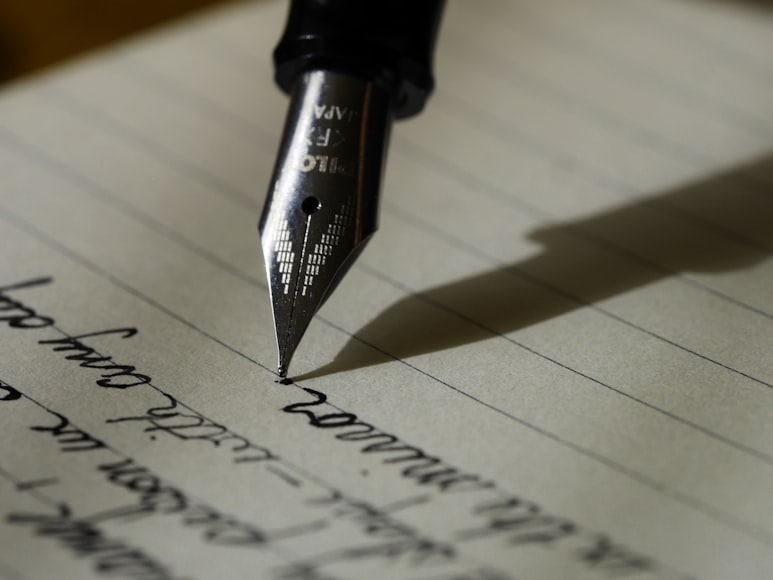
Your first writing draft will likely be riddled with errors. However, the more you practice, the more you learn to avoid these mistakes.
Proof that you’re improving is that you make fewer common writing mistakes with each new piece. Let’s say you find an academic writing helper to write my term paper cheap. You’d expect a well-researched paper that is original and free of mistakes.
Error-free writing is one reason many hire the services of professional essay writers online. But you also need to learn the type of writing mistakes to avoid in your work. We’ve identified ten of these errors.
Long introductions
Introductions are important writing sections, but a long introduction can be exhausting. The first few paragraphs that introduce your piece should be brief and punchy.
At the same time, your introductory paragraphs should leave the readers with a lot to desire, urging them to read further. Let your introductions offer a little dose of the content you will flesh out in the body of the piece.
By most web content standards, you should write a minimum of two paragraphs for your introduction. Any introduction beyond three paragraphs is too long.
Incorrect use of commas
A comma separates thoughts, items, or phrases in a sentence. However, some people wrongly use commas to connect or join independent sentences.
While commas can help guide readers, don’t use a comma where a period fits. Too many commas (or too few) can disrupt the flow of your thoughts and confuse your readers.
Lots of adverbs
Words ending with “ly” cheapen your writing. Instead of adverbs, use stronger verbs.
For example, replace “walked really slow” with the verb “crawled.” The verb packs more punch and paints a clearer picture for the reader.
Incorrect subject-verb agreement
This is a simple rule of grammar: don’t use a plural verb with a singular subject and vice versa.
As you write, insist on the correct subject-verb agreement throughout.
Here’s a fine example:
- Incorrect: James play soccer every Saturday afternoon.
- Correct: James plays soccer every Saturday afternoon.
Wordiness (inflated sentences)
Inflating your writing with unnecessary words and filler sentences will read as fluff. There’s no need to use long sentences where short ones will be more than enough. When you notice fluff, don’t hesitate to get rid of it.
Wordy sentences disrupt the rhythm of your writing and affect the quality of the entire work. Even Shakespeare noted that brevity is the soul of wit. Learn to use the smallest number of words to convey your message. You can even start by getting help from professional paper writing services online. And if you use the Do My Essay promo code, you’d get a much better deal.
Tautology
Tautology means expressing the same intent twice using different words. It’s normal to make this mistake when typing fast. But tautology creates redundancy, so you should eliminate the extra words.
- Incorrect: The boss gave the employee of the year an added bonus.
- Correct: The boss gave the employee of the year a bonus.
Other popular tautologies include “ATM machine,” “hot-water heater,” and “PIN Number.” Once you understand how to anticipate tautology, avoiding them in sentences will become easier.
Sentence fragments
These are incomplete sentences or sentences with something missing. They could also be independent clauses or long phrases. If it doesn’t read like a complete sentence, then it’s a fragment.
As a general rule, only use sentence fragments if it is creative writing.
Dangling modifiers
Modifiers are helpful only when they’ve got something to modify. If you’re unsure of the modifier’s objective, you should rewrite the sentence to clarify yourself.
Even squinting modifiers, which are adverbs in the wrong places, can be confusing. Move the modifier to its correct position in the sentence to correct this mishap.
The good thing is some grammar apps like Grammarly can easily detect dangling modifiers. It’s essential to address these awkward situations so that your writing is easy to understand.
Ambiguous pronoun preferences
A person reading your piece needs to know who you’re referring to when you use “him” or “her” in a sentence. When a pronoun doesn’t have a clear antecedent, it becomes ambiguous. Here’s a good example:
- Incorrect: Anna arranged to have lunch with him but couldn’t meet up because he kept her waiting.
- Correct: Anna arranged to have lunch with Tim (him), but couldn’t they meet up because he ghosted her.
Moreso, you want to ensure that your pronoun matches the word it will replace. Your pronouns are unambiguous as long as the reader can directly identify what a pronoun is referring to.
Run-on sentences
These are also known as fused sentences. This occurs when two complete sentences are looped together without using the correct punctuation or conjunction.
The best sentences contain only one idea. Once a sentence is packed with several points or feels too long, it’s your cue to split it up. Too many run-on sentences in one essay can confuse and leave your readers distracted.
To avoid this error, proofread after writing and ensure two or more independent clauses communicate only one idea. But be careful so that each of your sentences is complete and you don’t end up with sentence fragments.
Conclusion
As you write, pay attention to language choice, diction, grammar, punctuation, and spelling. It’s the only way to convey your message without being misunderstood. Some writing errors may be up for debate, while others are obvious and unsettling. Avoiding these ten common mistakes will help you write more clearly for your readers.

 BCNN Two (2)